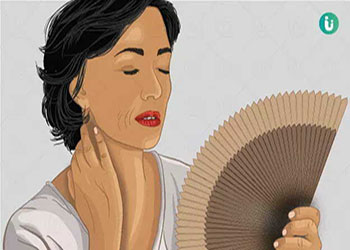
Hot flushes is the most common symptom experienced by females during the peri-menopause and menopause phase.
Symptoms
It is the sudden feeling of warmth in the body, more over the face, neck and chest. This feeling can be accompanied by rapid heart beats and, in many cases, ends with cooling of the body.
Hot flushes can last from a few months to a few years in females. Each episode lasts from several seconds to several minutes.
The common age for hot flushes is from 45 to 55 years, which varies from case to case.
Causes
-
The female body gets used to high levels of estrogen from the stage of puberty. As age advances, the ovaries start winding down process, ovulating irregularly. In some months there is no ovulation, whereas in other months it might ovulate once or even more times, in a month, causing fluctuations of hormones, especially estrogen and progesterone. The dropping level of estrogen disturbs the brain's "Thermostat" which manifests as hot flushes in females.
Hormonal therapy, if withdrawn, can give hot flushes.
Other medical conditions like thyroid disorders, reproductive organ malignancies, certain tumors can trigger hot flushes.
Lifestyle factors like smoking, alcohol, excessive caffeine, stress, diet which is not healthy can add to the frequency and severity of hot flushes.
Management
Hot flushes are very well managed most of the time by some changes in lifestyle and daily activities.
Wear light and loose clothes.
Keep the temperature of a room at one’s comfort level.
Frequent showers
Reduce stress levels by yoga, meditation and regular physical exercises.
Avoid triggering factors like spicy food, alcohol, smoking, caffeine.
Diet rich in fiber and water like fruits and vegetables.
Diet rich in natural phytoestrogens like flaxseed can be included in meals.
Food dense in nutrients and anti-oxident properties like dried fruits can be added to daily meals to alleviate the severity of hot flushes.
Stay hydrated by drinking plenty of water.
Limit processed foods high in sugar, salt and unhealthy fats.
Eat frequent, balanced meals.
supplements of vitamin B6, B9,B12,vitamin D3, calcium, omega fatty acids, magnesium and vitamin E can be given to reduce the symptoms of hot flushes
Treatment
In some cases, the intensity and frequency of hot flushes interferes with routine life, causes sleep disturbances, or creates embarrassing situations.
Treatment like Hormone Replacement can be offered and guided by a health expert.